September 4, 2026
The Sleep Apnea Pill Is Real. So Is the Fine Print.

The first once-nightly pill for sleep apnea cleared a real Phase 3 trial, but the viral stat oversells it. What AD109 actually does, and who it's for.

.svg)



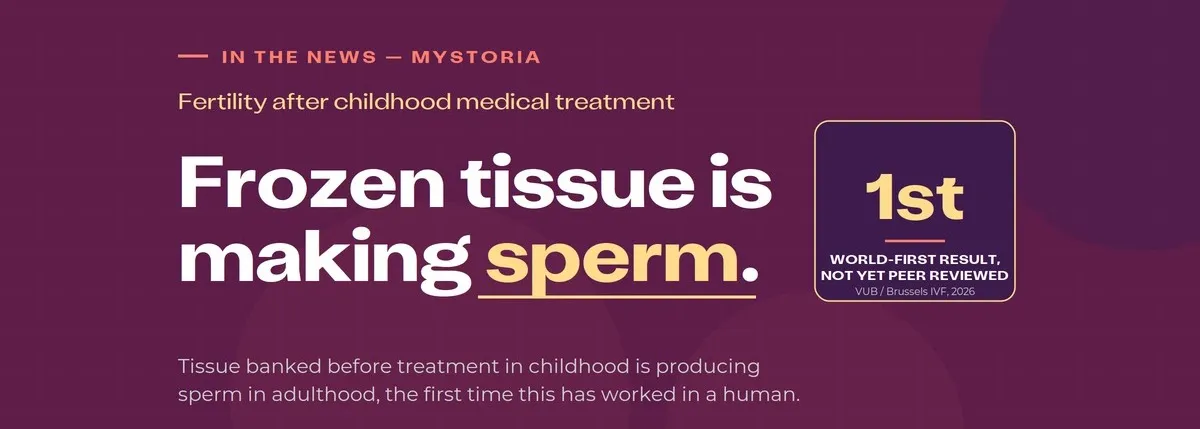
Treatment for childhood cancers and serious blood disorders is better than it's ever been. More kids survive, grow up, and go on to live full lives. But the chemo and radiation that save those lives can quietly take something with them, and for children treated before puberty, one of the things most at risk is the ability to have biological children later.
A team in Brussels just reported something that's never been done before. A patient left without measurable sperm after treatment in childhood is now producing sperm again, grown from their own testicular tissue, frozen back when they were a pre-pubertal child. It's the first time this has worked in a human.
Before puberty, the body isn't making sperm yet, so the usual fertility backup, banking a sperm sample, isn't an option. What the body does have is immature testicular tissue containing the stem cells that would normally become sperm in adulthood. The idea has been to freeze that tissue early and hope the science to use it would catch up.
For this patient, the tissue was frozen in 2008, before treatment for sickle cell disease, a chemotherapy conditioning regimen followed by a stem-cell (bone marrow) transplant. To bank it, one whole testicle was surgically removed, cut into small fragments, and cryopreserved; doctors confirmed at the time that the tissue contained ...



With a background in nursing and a genuine passion for care, Jessie supports myStoria members as part of the Concierge team.