September 2, 2026
Hysteroscopy: What a Camera in the Uterus Can (and Can't) Tell You

A hysteroscopy is the clearest view inside the uterus. Good for fixing a real problem, but oversold as a routine screen. When it helps, and when to ask.

.svg)



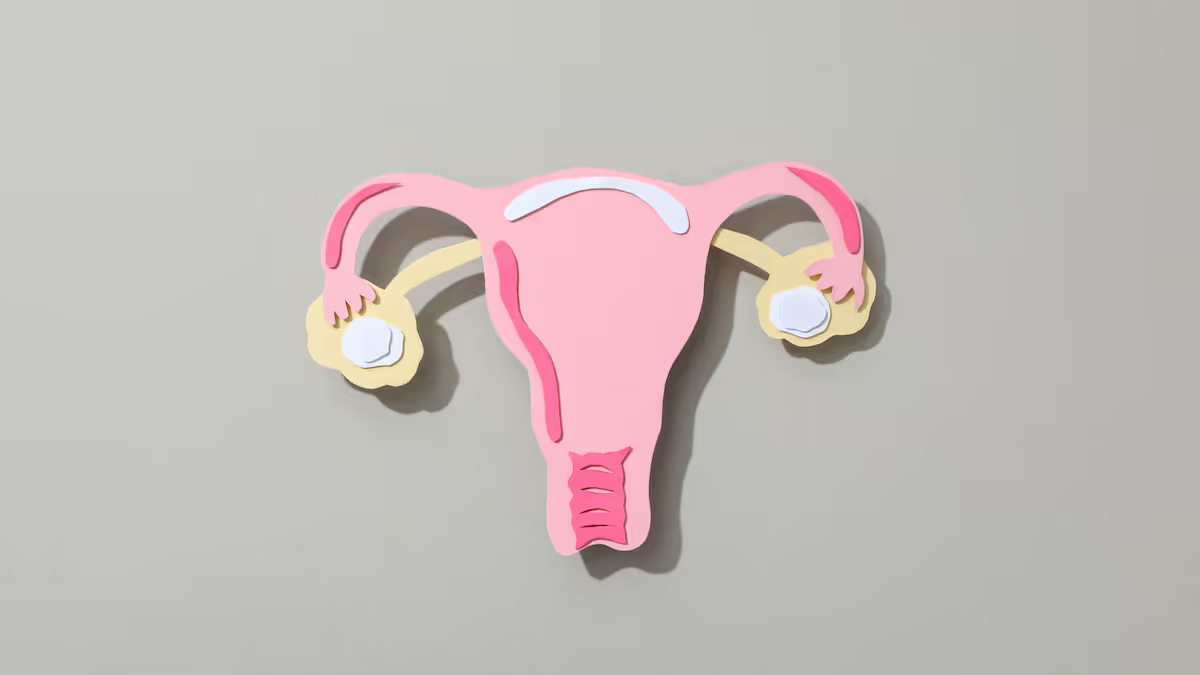
Here's the reality: you're born with all the eggs you'll ever have, and that number naturally declines over time. No supplements, diets, or lifestyle changes can replenish or increase your egg count.
While it's tough to hear, understanding this helps set realistic expectations as you move through your fertility journey.
Understanding ovarian reserve and fertility is often clouded by misinformation, leading to confusion and unnecessary stress for those navigating their reproductive health. To help clear the air, our Medical Advisor, Dr. Marta Wais, is here to address some of the most common misconceptions, providing clarity and empowering individuals with accurate, evidence-based insights.
Myth: High AMH levels mean easy pregnancies.
"AMH can help us 'guess-timate' someone's egg reserve, but it does not predict whether someone can get pregnant or not."
Myth: Low AMH levels mean no pregnancies.
"AMH levels don't predict the chance of pregnancy—I've had many patients with low AMH who have had healthy pregnancies!"
Myth: Lifestyle changes can boost AMH.
"Unfortunately, there is no evidence-based way to increase AMH, so maximizing the quality of what you've got is important!"
Myth: Younger women can't have low ovarian reserve.
"Although it is less common for younger women to have a low AMH, it can happen, and it is important to understand what that means."
Myth: Fertility treatments can restore egg count.
"I wish fertility treatments could make new eggs for patients who have low egg reserves, but unfortunately, it's not possible—that's why we focus on egg quality!"
Myth: Fertility treatments like IVF deplete egg supply, causing early menopause.
"Stimulating the ovaries with medications, as we do in IVF, does not affect a person's egg supply, cause early menopause, or cause infertility."
Myth: Stress is the main cause of infertility.
"There are many, many potential causes of infertility! Although stress is widespread among patients with infertility, it is rarely the sole cause."
Myth: Taking prenatal vitamins improves egg count.
"Prenatal vitamins are very important in maximizing the chances of a healthy pregnancy as they reduce the risk of birth defects—but, unfortunately, they do not increase a person's egg number."
Myth: Irregular periods mean infertility.
"Irregular periods may make it more difficult to conceive, but it does not equate to infertility."
Myth: You can't get pregnant with diminished ovarian reserve.
"Many patients with low egg reserve conceive naturally and may be unaware they have low egg reserve."
Myth: Fertility declines only after 35.
"For people with eggs, natural fertility rates start declining around age 32, but egg number starts declining before that. However, there are many causes of infertility, so younger people can have infertility too!"
While you can't increase your egg reserve, there are ways to improve egg health:

Every fertility journey is unique. While you can't increase ovarian reserve, focusing on egg quality, overall health, and exploring medical options can maximize your chances. Remember, you're not alone in this. Stay informed, stay positive, and take it one step at a time.
If you've been navigating fertility challenges, you've probably asked yourself, "Can I increase my ovarian reserve?" It's a question that comes up often, and it's completely valid to wonder about. There's a lot of information—and misinformation—out there, so let's break it down together, sorting the facts from the myths and giving you a clearer picture of what's really possible.
For more insights and resources from Dr. Wais, follow her on Instagram and explore her podcast dedicated to fertility education and empowerment:
Author: Hailey Rodgers | Medically Reviewed By: Dr. Marta Wais