February 10, 2025
Meet Alexie Reilly

The Fertility Journey of myStoria advocate Alexie Reilly.

.svg)



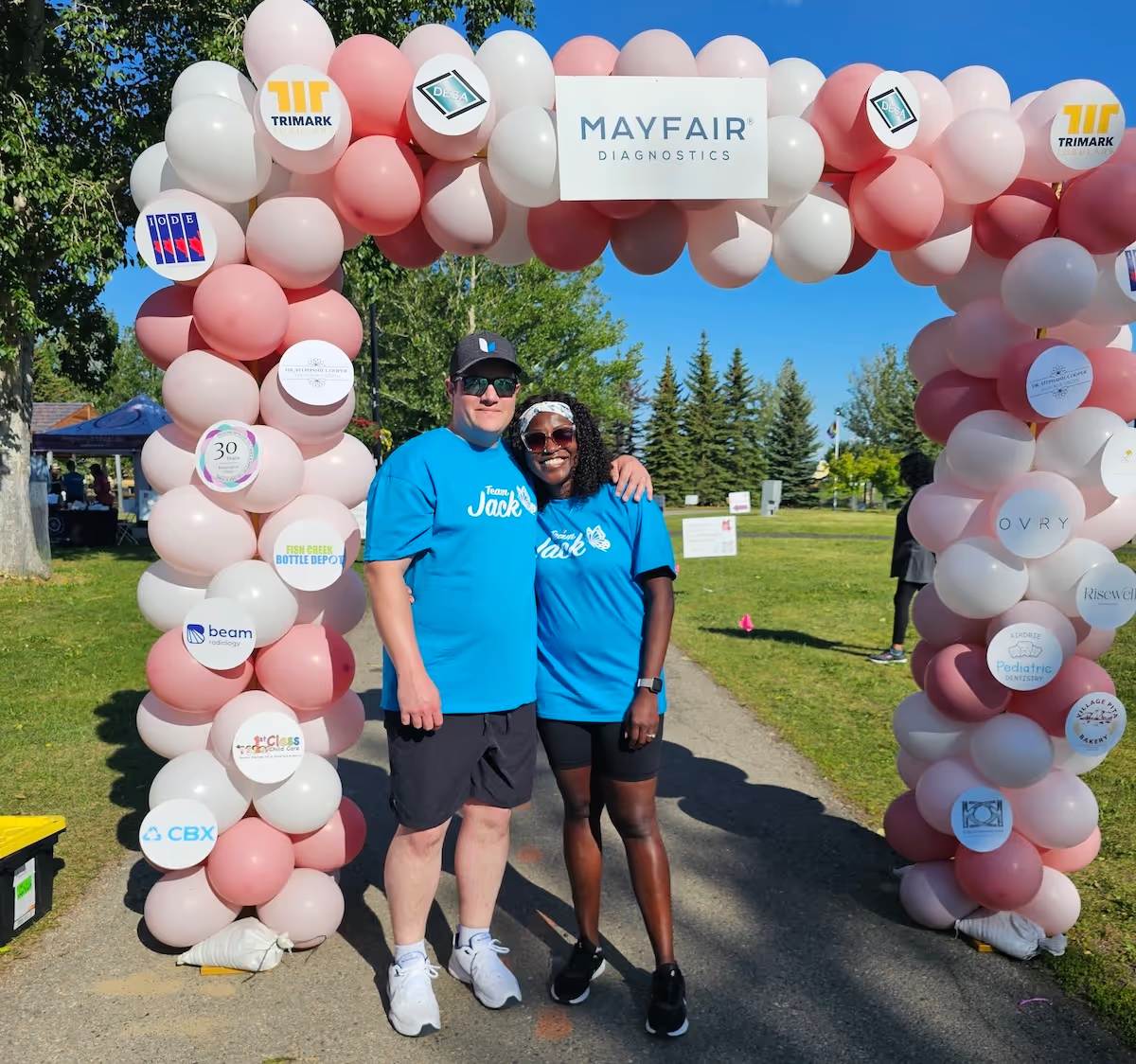
My fertility journey technically began many years ago when I had irregular periods as a teenager. At the time and even as a young adult, I did not know it would have become such an important part of my journey or how much of an impact it would have on my fertility. Fast forward to when I met my now husband, I knew I wanted to have a family with him. We both come from big families with lots of siblings and cousins, so we were excited about what our family would look like and couldn’t wait to have children of our own. We got married in 2019 and giddily started our journey to parenthood in early 2020. I remember getting off my birth control prescription and thinking I would become pregnant right away.
Unfortunately, that was not my reality. After 6 months of not taking my birth control prescription and still not having a period, my family doctor referred me to a gynaecologist who diagnosed me with PCOS. The doctor nor gynaecologist explained what a PCOS diagnosis would mean for my body and my fertility. After doing my own research, I began to understand the symptoms and challenges, and was able to get into a fertility clinic.
Since starting our journey, we have done 12 medicated cycles with letrozole and clomid, and had an early missed miscarriage in 2021. We later had two unsuccessful IUIs in 2022. We completed 1 round of IVF in June 2023 which resulted in 12 beautiful embabies. In August 2023, we did a frozen embryo transfer and it was successful. However, our precious baby, Jack, died at 17+ weeks. We have had two cancelled cycles this year (May and September 2024) and have more questions than answers.
My fertility journey has been one filled with a lot of loss, grief and hope. It is a rollercoaster ride I don’t want to be on but I stay on because one day, I hope we’ll be able to bring a healthy baby earthside.
At the beginning of my journey I felt so isolated and alone. I didn’t know anyone around me who had fertility struggles so I was afraid to speak up or share my experiences, and I suffered in silence. It felt like I was on an island and conception came so easily for every other desiring mother/parent except me. Being referred to a fertility clinic didn’t help this feeling of isolation; it only amplified it. My experience at the clinic made me feel like I was not unique in my struggles and I was just another number on the list of patients they support. This was incredibly frustrating.
Before trying to conceive, I assumed it was a straightforward process like I was taught. It was very surprising to learn that so many women struggled with infertility. I didn’t expect the statistics of not only infertility but losses to be so high.I was also pleasantly surprised by the size, compassion and willingness of the community that exists to support women on their fertility journeys. So many women have shared their stories online to advocate, share knowledge, raise awareness and foster connection with others like myself. Being able to connect with others navigating fertility issues helped me emotionally and mentally.
Being on this journey has allowed me to understand the importance of reproductive health, and the need for sharing correct information and educating girls and women about their bodies and family planning. The knowledge and support I have gained have helped me to make better informed choices about my body and decisions towards my family planning.
There are several Instagram profiles that have been so helpful along the journey. I have been able to ask questions about other women's journeys, and found comfort and hope in their stories and insights. I also really value the tools and resources shared by Fertility Matters Canada on Instagram and in the Facebook group. The Pregnancy and Infant Loss Support Centre has also provided such client-centred care, which has been so welcomed and empowering. Therapy as a couple and individually has also helped my husband and I.
I wish I knew more about my own reproductive health and how to advocate for myself at the beginning. I would have asked for more explanation about my irregular cycle, ways to help manage it early and potential implications later on in lifes. I also wish I knew that trying to conceive doesn’t always happen as easily for everyone and how mentally, physically and emotionally exhausting the journey can be.
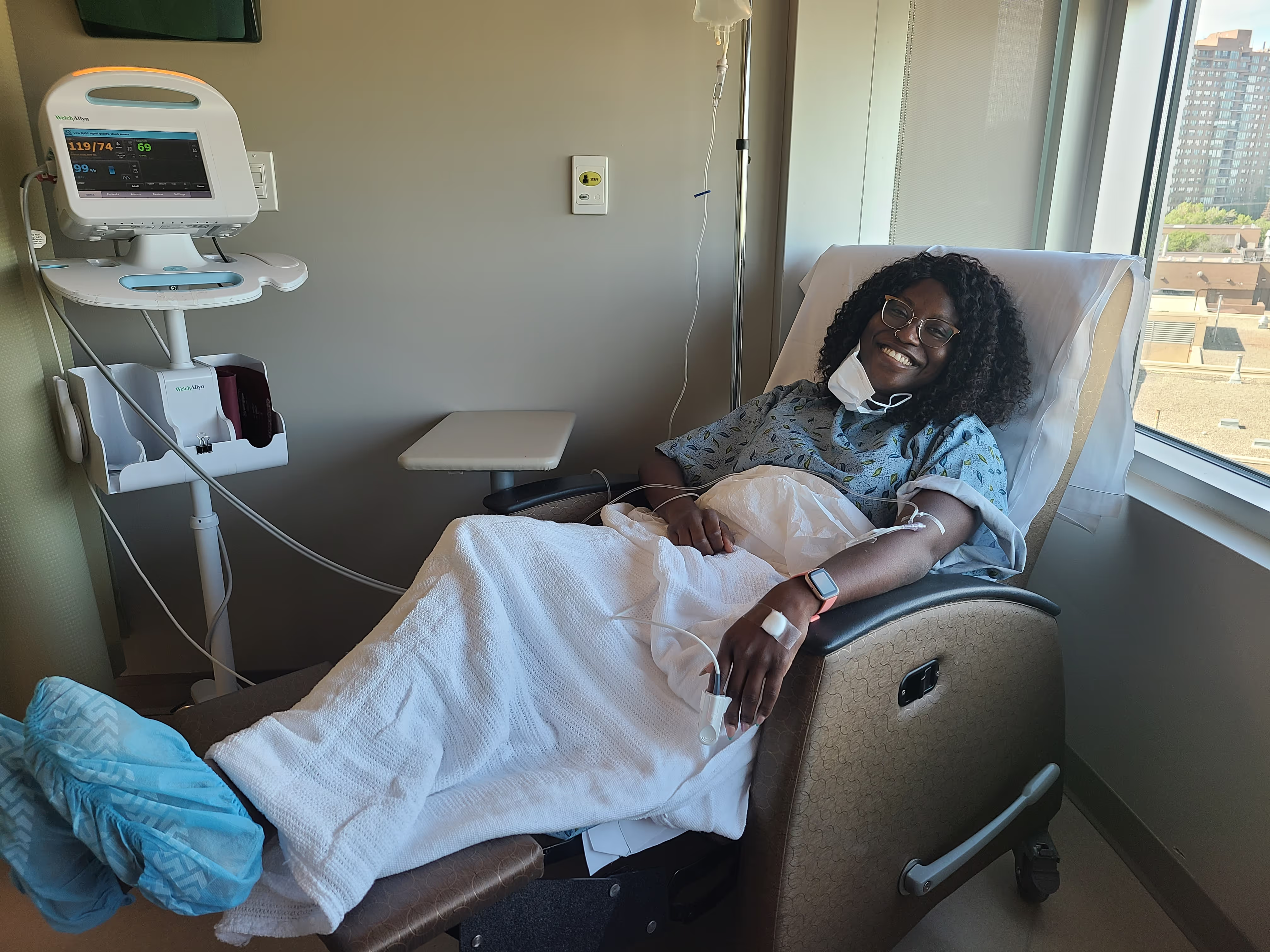
At the beginning of my journey I didn’t have the tools, resources, information, or support to advocate effectively. All the people closest to me had never experienced infertility or loss and so they couldn’t relate or offer resources. However once I created my fertility instagram page and started following others I started to learn more and found support groups and organisations.
Through research, I learnt how acupuncture helped so many people along their journey. I decided to ask my fertility doctor about it and was advised that it would be a waste of time and money. I decided to go against this advice and it was the best decision. Acupuncture has not only helped me physiological on my journey but has helped immensely with my mental health. It has been so helpful in relieving my stress and anxiety.
With growing awareness and advocacy, I can envision a shift in the medical system where fertility is prioritised and seen as important as other health diagnoses or challenges. I also see greater access to compassionate, patient-centred and affordable care.
You don’t always have to be strong, it’s okay to talk about and grieve your journey in whatever way feels best for you. Trust your gut and do what feels right for your mind and body along the journey. Even though the journey may feel so isolating and overwhelming, you are not alone.





-p-1080%25202.webp)