
September 30, 2026
Sleep Apnea, Hiding in Plain Sight

Sleep apnea is a breathing problem you sleep right through, and 9 in 10 at risk go undiagnosed. Why it hides, how it differs in women, and what helps.

.svg)



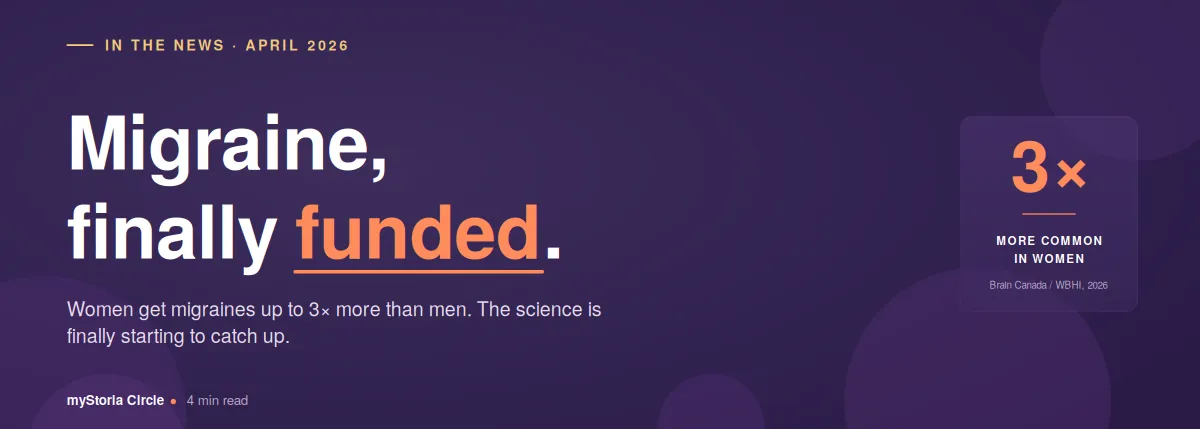
For decades, migraine has been treated like a bad headache. Something to push through. Something women were told was just stress, just hormones, just life.
That's starting to change. Brain Canada and the Women's Brain Health Initiative, with federal support, just launched a new research program built specifically to study migraine in women across the cycle, pregnancy, perimenopause, and menopause.
It's about time.
The numbers
And until now, almost none of the research asked why women or what hormones, life stage, and the way women are treated in healthcare have to do with it.
What else is happening in migraine research
Three other things landed in April worth knowing:
A new study followed 7,000+ people with migraine for a decade and found that air pollution spikes and heat are linked to more attacks. Worth tracking if your migraines feel random.
Researchers at the American Academy of Neurology meeting shared real-world data showing the brain fog people get with migraine actually improves with treatment, finally being studied as a real symptom, not a complaint.
A new review in Headache called out perimenopause as one of the trickiest, least-studied stretches for migraine. If yours have changed lately and you're in your 40s, that's why.
Where this lands for you
If you live with migraine, none of this is news. You've been tracking your triggers and managing flares for years.
What's new is that...



Carly Malo is myStoria's Head of Concierge. She has 2 decades of experience in direct nursing care, having worked in long-term care, sports medicine, practical nursing, and fertility/reproductive health.