October 9, 2026
The UK Just Made Pregnancy Loss a Bereavement. Most of Canada Hasn't.

The UK will give unpaid leave for pregnancy loss before 24 weeks from April 2027. In Canada, only federally regulated workers get dedicated leave.

.svg)



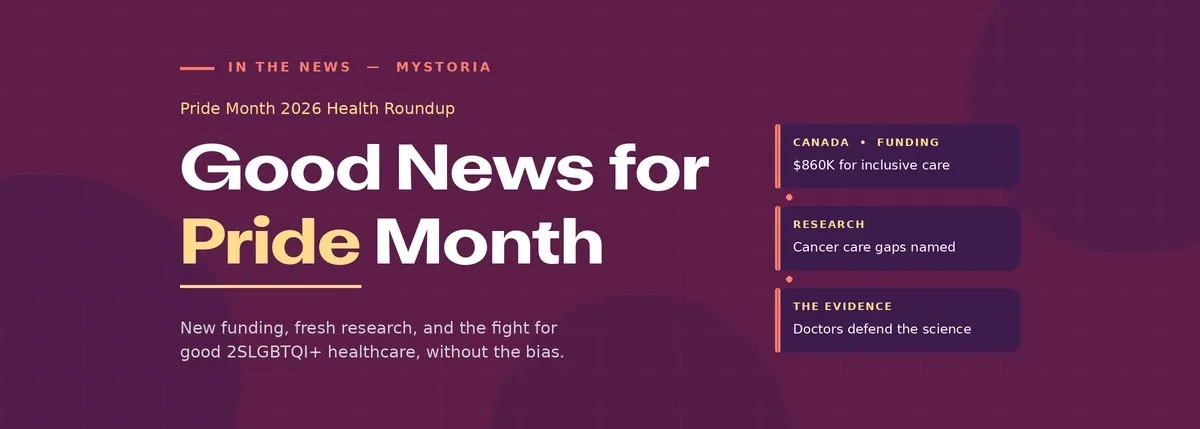
Happy Pride! This has been a genuinely busy stretch for 2SLGBTQI+ health, new funding, fresh research, and medical bodies drawing clear lines. Here's what's worth knowing this month, the wins and the work still ahead.
Canada put money behind inclusive care
In March 2026, Health Canada announced $5.4 million for sexual and reproductive health organizations. One grant stands out: Fertility Matters Canada received $860,078 to build an online tool helping Indigenous and 2SLGBTQI+ people navigate fertility care and assisted reproduction. The same round funded gender-inclusive care training for midwives nationwide. It's a concrete investment in closing the navigation gap that so many people hit when they try to find care that actually fits them.
New research put a number on a quieter problem: cancer care
This isn't a topic that gets enough airtime. A study published in January 2026 in the journal Cancers found that transgender and bisexual people face greater barriers to cancer survivorship care than cisgender lesbian and gay people, a reminder that the community isn't a monolith and that some groups within it are being left further behind. It lands alongside a broader, well-documented pattern: 2SLGBTQI+ people are at higher risk for certain cancers, yet are meaningfully less likely to be screened for them. The good news is that ...



Carly Malo is myStoria's Head of Concierge. She has 2 decades of experience in direct nursing care, having worked in long-term care, sports medicine, practical nursing, and fertility/reproductive health.