July 15, 2026
Sperm Analysis, Decoded

A semen analysis measures count, motility, and morphology against a reference group. Here's what it can and can't actually check.

.svg)



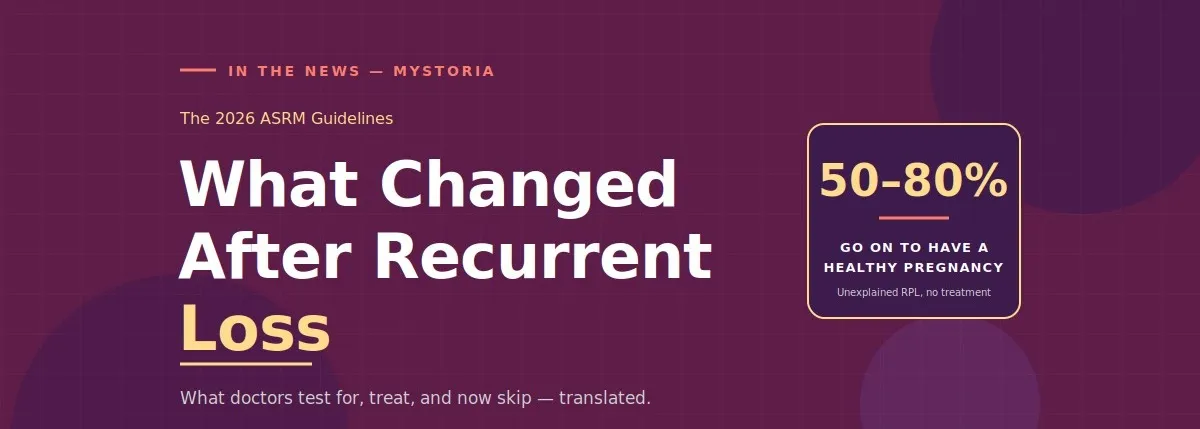
For the first time since 2012, the American Society for Reproductive Medicine (ASRM) has updated its guidance on recurrent pregnancy loss. These are the rules that shape how doctors test you, what they treat you for, and what they tell you to try next.
If you've had more than one miscarriage, a lot of what you may have been offered in the past has just changed. Start with the number that matters most. Between 50% and 80% of people with unexplained recurrent loss go on to have a healthy pregnancy with no specific treatment at all. That's not a fringe statistic. It's the most likely outcome.
Start here: what "recurrent" actually means now
The definition is still two or more losses, and they don't have to be back-to-back. What changed is which losses count. The old guideline leaned on losses confirmed by ultrasound. The new one also counts chemical pregnancies, the kind confirmed only by a positive urine or blood test. Early losses turn out to carry a similar impact on recurrence risk, and access to early ultrasound varies from person to person.
A lot of people have been told their early losses "don't really count." Under the new rules, they do.
Recommended for everyone after recurrent loss
Four things are now on the table for every person with recurrent loss.
The first is ...



Carly Malo is myStoria's Head of Concierge. She has 2 decades of experience in direct nursing care, having worked in long-term care, sports medicine, practical nursing, and fertility/reproductive health.