September 18, 2026
Hashimoto's, Minus the Panic

Hashimoto's antibodies aren't an emergency, and no diet reverses it. What the condition actually is, when treatment starts, and which fixes fall apart.

.svg)



You're staring at a lab report. Somewhere between 'CBC' and a metabolic panel, there's a line that reads "Free T4" with a number next to it.
And you have no idea whether to celebrate or panic.
You're not alone. Most people encounter this value for the first time after a routine blood draw or a thyroid hormone flag, and the report itself offers zero context about what the number means for your body.
Here's why that single number deserves your attention: your thyroid gland influences nearly every system you rely on: metabolism, heart rate, mood, digestion, and reproductive health. A free T4 result is one of the clearest windows into whether those systems are working the way they should. And when free T4 is off, the downstream effects can show up as fatigue, weight changes, anxiety, brain fog, or menstrual irregularities that get dismissed as "stress" for months before anyone thinks to check thyroid health.
This guide will walk you through what free T4 measures, why the "free" part matters, what your number likely suggests, and most importantly, what to ask your doctor at your next appointment. No biomedical science degree required.
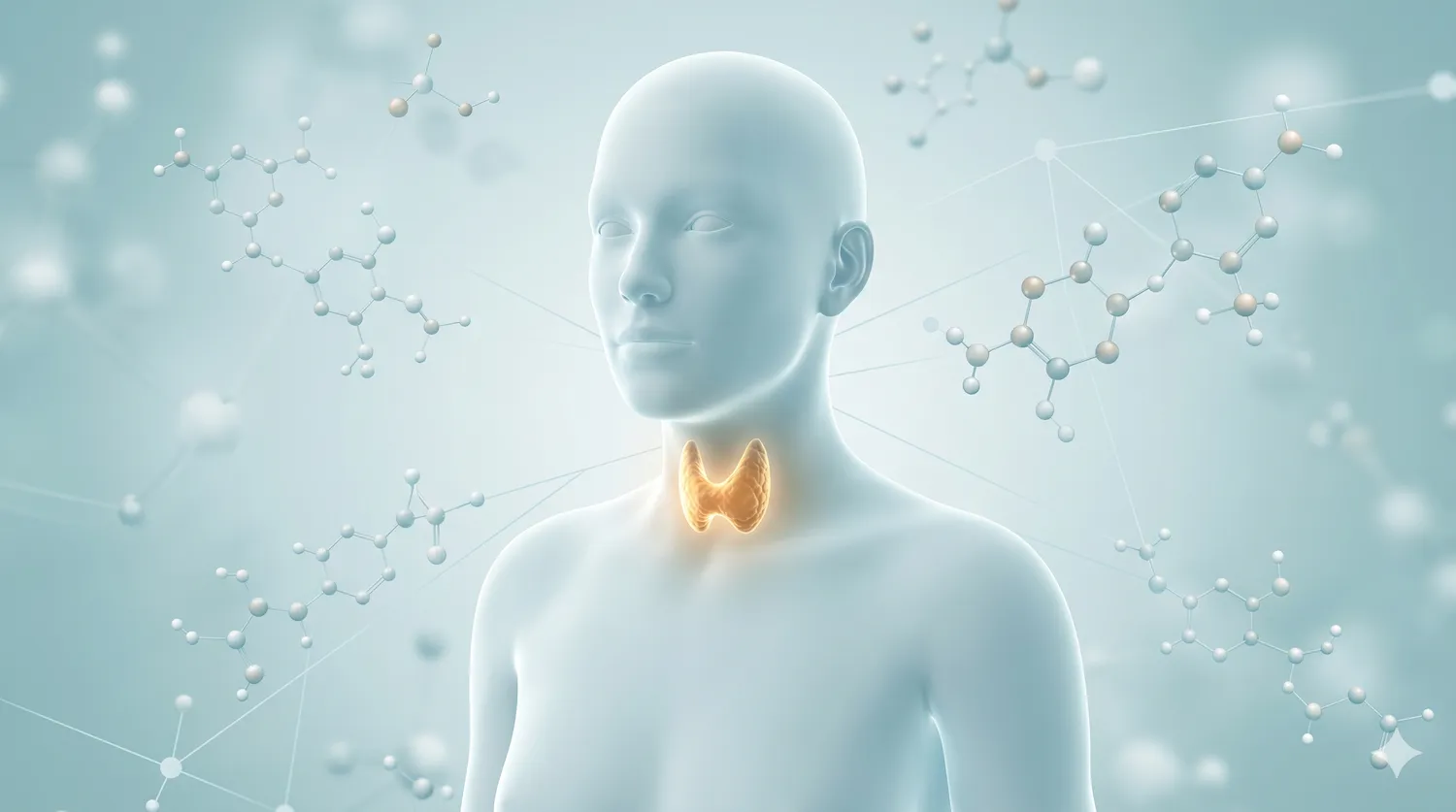
Your thyroid is an important endocrine gland (hormone producer) in your neck. Its primary output is a hormone called thyroxine, which is often shortened to T₄ or T4. It's built from iodine (an important dietary element that's commonly added to table salt) and the amino acid tyrosine (a protein component your body produces on its own). T4 acts as the master regulator for how your cells use energy.
Your thyroid produces about 80% T4 and only 20% of the more active hormone T3 (triiodothyronine — try saying that 10 times fast!). T4 is essentially a reserve supply: It's a prohormone that converts into T3 in tissues throughout your body, especially the liver and kidneys.
Now here's the critical distinction: T4 exists in two forms. Free T4 travels into body tissues that use it. Whereas bound T4 attaches to carrier proteins, which actively prevent it from entering tissues.
More than 99% of T4 in your body is bound. Think of it like pedestrians, versus passengers on a shuttle bus: Most T4 is buckled in with the doors locked, riding through your bloodstream attached to transport proteins like thyroxine-binding globulin. Free T4 is the small fraction that's stepped off the bus and can walk into your cells to get things done.
This tiny percentage of unbound, free circulating T4 represents the physiologically available hormone that is biologically active for your body. That fraction might sound negligible, but it's clinically meaningful.
This is why doctors prefer a free T4 test over a total T4 test. Pregnancy, liver disease, and certain medications can all change the amount of binding proteins in your system, which affects total T4 but not free T4. A person on estrogen-containing birth control, for example, might show elevated total T4 while their actual thyroid function is perfectly normal. Free T4 cuts through that noise and gives a more reliable signal of what your thyroid is doing.
In other words: If everyone is locked inside the bus, no one is going into the shops and restaurants. Doctors only care about how much T4 is walking around.
The mechanics are straightforward. The test requires a blood sample, which is drawn through a needle from a vein in your arm. Results typically come back within a day or two, and in most cases, no pre-test fasting is required. If you've ever had blood drawn for any routine lab panel, you already know the drill.
One interference issue deserves a spotlight: biotin. If you take a supplement for hair, skin, or nail health, there's a good chance it contains high-dose biotin (vitamin B7). There are numerous reports of biotin interference with laboratory testing, specifically with thyroid function tests. Most commonly, biotin use can result in falsely high levels of T4 and T3 and falsely low levels of TSH, leading to either a wrong diagnosis of hyperthyroidism, or the data-informed medical belief that a thyroid hormone dose is too high.
The American Thyroid Association has recommended that patients stop taking biotin for at least two days before thyroid testing to avoid the risk of a misleading test. For higher doses, and to play it safe, many clinicians will extend that recommendation to three to five days. Always follow your doctor's advice.
Doctors will typically order a free T4 test after an abnormal TSH result, when symptoms of hypothyroidism or hyperthyroidism are present, to monitor treatment for a known thyroid condition, or as part of a fertility or hormone workup.
You may also see a "TSH with reflex to free T4" panel on your lab requisition. This means free T4 is automatically added for testing, but only if your TSH falls outside the normal range. This is one of the most common ordering patterns, as it helps get faster results by preventing unnecessary testing. And now you know what it means.
The normal range for free T4 in adults is 0.8 to 1.8 nanograms per deciliter (ng/dL), though exact ranges vary between labs. Normal value ranges for free T4 may vary slightly among different testing centers, so always compare your result to the reference range printed on your own report, not to a number you found online.
A free T4 value by itself doesn't tell the full story. You need to read it alongside TSH. Here's how the most common combinations map out:
If you're pregnant or recently postpartum, standard adult reference ranges don't apply. Free T4 shifts across trimesters: It runs high in the first trimester due to hCG stimulation, then low in the second and third trimesters. Flag your pregnancy status with your provider so results are interpreted using trimester-specific ranges.
What if your results come back "normal" but you still feel terrible? You're not imagining it. Being within the "normal" range doesn't always mean your levels are optimal for you. Some people experience symptoms of hypothyroidism even when their levels fall in the lower end of the normal range. Individual variation in thyroid hormone sensitivity means that what's optimal for one person may not be ideal for another. Free T4 in range also doesn't guarantee that your body is converting T4 to T3 efficiently. Track your symptoms carefully and then bring your data to your provider for further evaluation, rather than letting a single number close the conversation.
hypo = low
hyper = high
High TSH combined with low Free T4 typically points to hypothyroidism, meaning the thyroid isn't producing enough T4. The pituitary gland (in your brain) detects the shortfall and compensates by releasing more TSH. This is why both markers shift together when there's a primary thyroid problem.
The most common cause of low free T4 is Hashimoto's thyroiditis — an autoimmune condition in which the immune system gradually damages thyroid tissue. It's also the leading cause of hypothyroidism in developed countries overall. (In developing countries, a lack of nutritional iodine is the more common cause.)
Symptoms tend to accumulate slowly: persistent fatigue, unexplained weight gain, cold intolerance, constipation, brain fog, dry skin and hair, depression, and heavier or irregular periods. Severity varies widely. Some people feel profoundly fatigued with modestly low levels, while others barely notice despite clinically significant results.
Other causes of low free T4 include thyroid surgery, radioactive iodine treatment, certain medications (especially heart medications, lithium, and some cancer therapies), and iodine deficiency. In rare cases, low free T4 paired with low or normal TSH points to central hypothyroidism: Which is actually a pituitary problem, rather than a thyroid one.
The fertility connection matters here. Thyroid dysfunction (even subclinical hypothyroidism) is associated with irregular ovulation and increased pregnancy loss risk, which is why this panel shows up routinely in fertility evaluations.
A free T4 reading above normal points to an overactive thyroid. The most common cause is Graves' disease. This is an autoimmune condition where the thyroid continuously overproduces hormones, typically showing up as high free T4 paired with low TSH. But other causes include thyroiditis (inflammation triggering a temporary hormone dump), thyroid nodules, or excessive intake of thyroid medication.
Symptoms of high free T4 include unintentional weight loss despite normal or increased appetite, rapid or irregular heartbeat, anxiety, heat intolerance, sweating, tremors, frequent bowel movements, and lighter periods.
One scenario worth clarifying: elevated total T4 with normal free T4 can occur in pregnancy or among people taking estrogen-containing contraceptives. This is actually a measure of increased binding proteins (more busses circulating), not true hyperthyroidism — and it's one more reason free T4 is the more reliable marker.
Several variables can shift your results without reflecting a true change in thyroid function.
A single out-of-range free T4 result is a starting point, not a verdict. Repeat testing, TSH comparison, symptom assessment, and clinical context all factor into what happens next.
Your doctor may order a repeat thyroid panel to confirm the finding, along with thyroid antibody tests — TPO antibodies (thyroid peroxidase) if Hashimoto's is suspected, or TSH receptor antibodies if Graves is on the table. A thyroid ultrasound or T3 testing may follow, depending on the clinical picture.
For low free T4 that leads to a hypothyroidism diagnosis, the standard treatment is levothyroxine (synthetic T4). Most people notice improvements in energy within two to four weeks, with full optimization typically taking six to eight weeks, which gives time for the doctor to monitor T4 levels and adjust the dosage if necessary.
For high free T4 with confirmed hyperthyroidism, treatment depends on the cause and severity. Medications called thionamides can stop the thyroid from producing too many hormones. Radioiodine therapy destroys cells in the thyroid gland, reducing hormone output. Surgery may be recommended to remove part or all of the thyroid gland. Your provider will guide which path fits your situation.
Before your next appointment, write down these questions:
Walking in with specific questions changes the dynamic of the visit. You're not waiting to be told: You're directing the conversation toward the answers you need. Make sure you take good notes or ask your doctor for permission to record the conversation, so the you have a record of specific answers and medical terminology you can refer back to later.
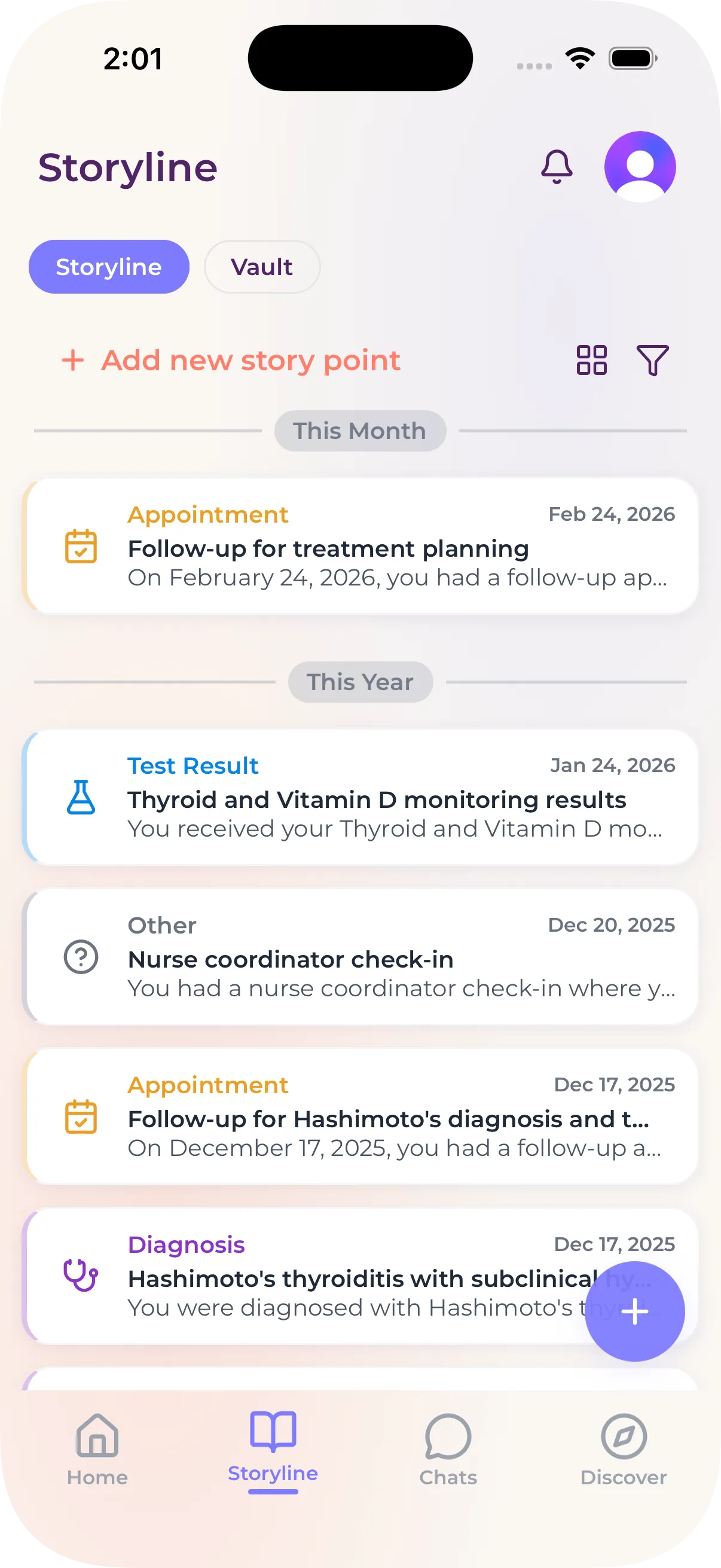
(Pro-tip: Upload your voice recording directly into myStoria — we will automatically transcribe the call, add relevant storypoints to your health timeline, and make it available to your chat companion for further discussion.)
Your free T4 result is one of the most useful single numbers on a lab report. But it's a conversation starter with your provider, not a conclusion. It tells you whether the active, unbound fraction of your thyroid's primary hormone is within the expected range. When paired with TSH measures, Free T4 levels reveal patterns that point toward specific conditions and clear next steps.
If your thyroid function has been tested recently, the most important thing you can do right now is look at your lab report, find your free T4 and TSH values, and compare them to the table in this guide. If something looks off, or if the numbers look fine but your symptoms don't match, bring that gap to your doctor for discussion. You deserve an answer that accounts for the whole picture, not a dismissal because one number fell inside a reference range.
A free T4 test measures only the unbound, metabolically active thyroxine hormone circulating in your blood — the tiny fraction that's actually available to your cells and tissues. Doctors order it after an abnormal TSH result, when thyroid symptoms are present, to monitor treatment for an existing thyroid condition, or as part of a fertility or hormone panel.
The normal range for free T4 in adults is 0.8 to 1.8 nanograms per deciliter (ng/dL). That said, reference ranges vary between laboratories, so always compare your result to the specific range printed on your own lab report. A value near the edge of "normal" can still warrant a conversation with your provider if your symptoms tell a different story.
This pattern is called subclinical hypothyroidism. When you have high TSH levels and normal T4 levels, it's usually considered subclinical hypothyroidism (also called mild thyroid failure), a condition that occurs in 3% to 8% of the population. Your healthcare provider will likely continue to monitor your levels to see if they change and result in clinical hypothyroidism. Treatment may be considered if TSH is significantly elevated, symptoms are present, or you're planning pregnancy.
Yes. Biotin is often taken as a supplement for a variety of proposed health benefits, and there are numerous reports of biotin interference with laboratory testing, specifically with thyroid function tests. Also, estrogen-containing contraceptives raise binding proteins (primarily affecting total T4), and amiodarone can alter thyroid hormone levels directly. Always disclose every supplement and medication to your ordering provider before testing, or you'll end up with skewed results, and this can be dangerous.
Yes. A free T4 within the reference range doesn't guarantee that your body is efficiently converting T4 to the more active T3 hormone. Some people experience symptoms of hypothyroidism even when their levels fall in the lower end of the normal range. Individual variation in thyroid hormone sensitivity means that what's optimal for one person may not be ideal for another. If your number looks fine but you don't feel fine, that's a reason to keep talking with your provider — not a reason to stop asking questions.