September 18, 2026
Hashimoto's, Minus the Panic

Hashimoto's antibodies aren't an emergency, and no diet reverses it. What the condition actually is, when treatment starts, and which fixes fall apart.

.svg)



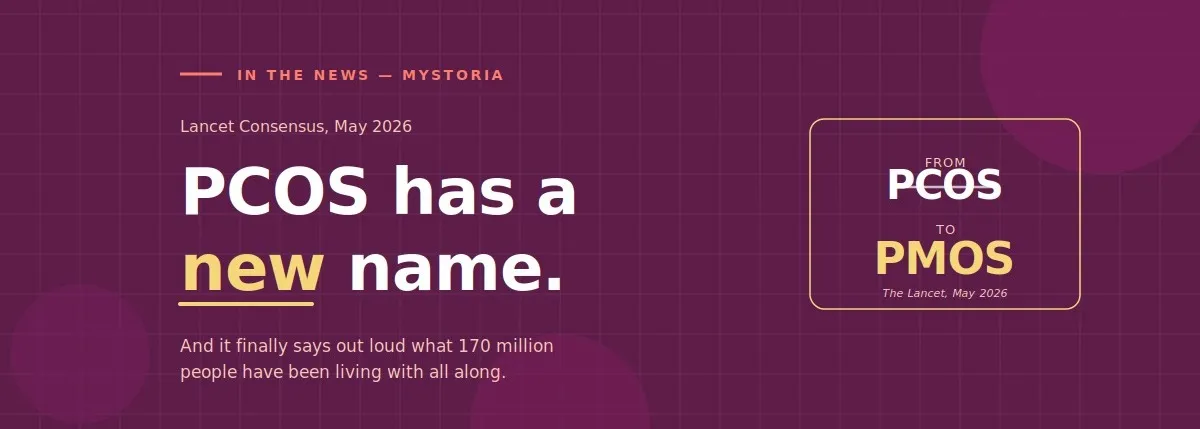
The reproductive health world just made a quiet shift that's been 14 years in the making. And it changes more than what's written on a chart.
PCOS (polycystic ovary syndrome) is being renamed. The global consensus is to call it PMOS: Polyendocrine Metabolic Ovarian Syndrome. The change was published in The Lancet on May 12, 2026, after a process involving 56 patient and professional organizations, 22,000+ survey responses across world regions, and more than a decade of negotiation between clinicians, researchers, and people actually living with the condition.
A single letter swap. But the letter does a lot of work.
The "C" in PCOS stood for cystic. The problem: there are no actual pathological cysts. What shows up on an ultrasound are arrested follicles, eggs that started maturing and stalled, not cysts in any clinical sense. A companion paper published alongside the consensus confirms there's no increase in abnormal ovarian cysts in people with the condition. The name was describing something that wasn't there.
The new name swaps that out for ...



With a background in nursing and a genuine passion for care, Jessie supports myStoria members as part of the Concierge team.