July 15, 2026
Sperm Analysis, Decoded

A semen analysis measures count, motility, and morphology against a reference group. Here's what it can and can't actually check.

.svg)



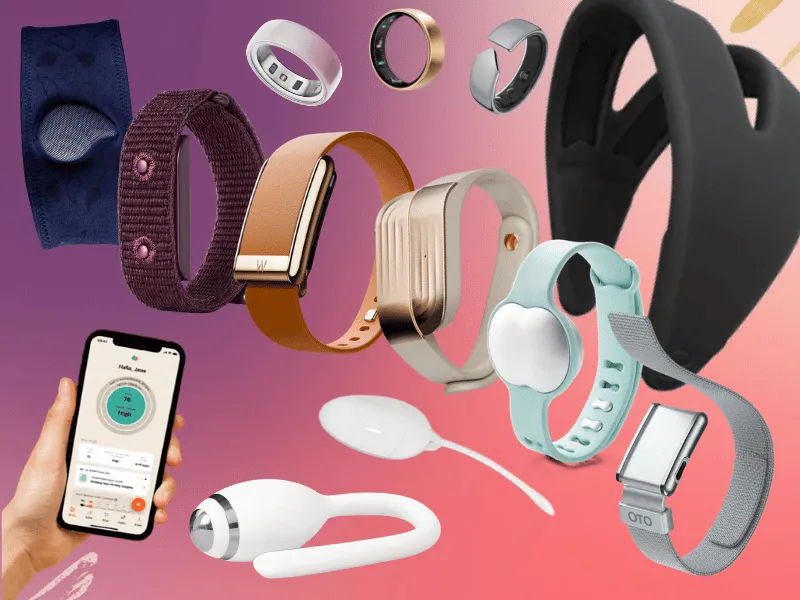
The fertility wearable category has grown dramatically from just a few years ago. But with volume, comes noise. You can now find countless devices that will promise to "know your fertile window," "optimize your cycle," or (occasionally) "get pregnant faster."
No matter what they promise, it's important to keep in mind that fertility wearables are pattern-detection tools, not pregnancy guarantees. Reproductive health still contains an enormous number of hard-to-identify and hard-to-solve problems that no sensor can fix.
Human biology is messy, personal, and doesn't like to be flattened into a dashboard (since we make a health app, we should know!). Plus, for ugly historic reasons rooted in misogyny, our understanding of women's biology is only just beginning to catch up to what we know about men's health.
Suffice to say, reproductive health isn't always convenient, and neither is the technology built to support it. So to help you find some physical tools that might be able to help, we've reviewed 16 devices across form factors. From discreet rings to, yes, devices you insert intravaginally, we attempt to cover what it tracks, where its limitations are, what it does beyond fertility, and how it gets data out so you can consolidate it somewhere useful (like myStoria!).
One important note: We didn't go ahead and spend thousands of dollars buying all of these devices. So this comparison is based on what the manufacturers say (and don't say) about their own products. Things change, and mistakes get made. Don't treat this as the holy grail of information about what you should put on your body (or in it!).
No device is right for everyone. This table is a starting map: a way to see what's out there before you go deeper. It answers one question: What is each fertility wearable trying to do?
Definitions:
Smart rings are definitely the most discreet option in this category. Usually worn all day and all night, they collect continuous data without announcing themselves to the room.
Oura Ring 4 takes a multi-sensor approach: temperature, HRV, heart rate, SpO2, and physical activity. Its integration with Natural Cycles enables FDA-cleared birth control use, but fertility features are secondary to its broader health focus. One thing worth noting: Skin temperature is not the same as basal body temperature. That distinction is important for fertility. That said, sleep, stress, and "readiness" tracking make Oura potentially useful well beyond fertility, including for perimenopause symptom monitoring and cycle-syncing your workouts. Oura exports data via its app and integrates with both Apple Health and Health Connect, making it one of the more portable datasets you could choose to upload into myStoria.
Femometer Ring is purpose-built for cycle tracking at a lower price point. It measures BBT and sleep through a dedicated app. The tradeoff for a lower price is a narrower ecosystem: Compared to Oura, Femometer is less useful for general health beyond your menstrual cycle. Data is exportable from the Femometer app, though the out-of-the-box integrations are more limited than Oura's.
Evie Ring was designed with a women-first ethos and stores data in HIPAA-compliant systems, notably with no ongoing subscription fee required. It tracks temperature, HRV, and activity, and claims particular relevance for perimenopause symptom tracking. Some data can be downloaded from the app, though some metrics stay platform-locked.
If you're trying to conceive naturally, wrist-worn overnight trackers can remove the daily ritual of waking up and immediately reaching for a thermometer. You wear them, you sleep, and data appears. Pretty easy.
Ava Bracelet tracks five parameters overnight: skin temperature, resting heart rate, HRV, breathing rate, and perfusion. Its machine-learning algorithm claims to be calibrated specifically to increase conception, not to avoid it. That's a feature if you're trying to conceive, but obviously becomes a limitation if your goals shift. It can also be useful during early pregnancy for pattern monitoring. Ava's data lives within its app; information about exporting isn't consistent. (Do you use Ava? Tag us on social media and let us know how exports work!)
NC° Band is Natural Cycles' own wristband, built to replace the a previous morning thermometer for NC° app users. Natural Cycles is the first and (so far) only birth control app to be FDA-cleared. The band automates data entry: You wear it overnight and it syncs automatically. Unfortunately, data portability outside the NC° ecosystem is limited by design. Natural Cycles offers five modes: Birth Control, Plan Pregnancy, Follow Pregnancy, Postpartum, and Perimenopause. So it can be useful at different life stages, and as your reproductive health goals ebb and flow over time.
Clair is a newer entrant focused on overnight temperature and HRV tracking with a clean, research-forward approach to reproductive health data. Stylish (or clunky, depending on your perspective), the first devices aren't expected to ship until early 2027. Worth watching as the platform matures.
Whoop wasn't designed for fertility, but its continuous HRV, heart rate, skin temperature, and strain data can add context to your reproductive health picture, especially if you have a high degree of physical activity and want to track how training load interacts with cycle phases. Whoop offers app-based exports and API access for more technical users.
Tempdrop is the only upper-arm device on this list and has earned a strong reputation for its sleep-correcting algorithm. It accounts for night waking, restless sleep, and fragmented rest to produce a more reliable automatic BBT reading. If you're a shift worker, parent of young children, or just someone whose nights don't follow a textbook pattern, it's a good choice. Fertility awareness method (FAM) users particularly value it because it provides raw BBT data they can chart independently. Many users export to third-party charting apps, and the native export options should make it straightforward for you to move data into myStoria too. One patience tax: the algorithm takes several weeks to calibrate, so be prepared for your early readings to be rough drafts.
OTO Fertility is a Toronto-based digital health platform exploring the stress-fertility connection — a genuinely under-explored angle. Stress and HRV data are central to its approach, as is direct collaboration with medical clinics. If you're preparing to start assisted fertility (IUI, IVF, etc.), it's a great choice. Do note that OTO is best used under the direct supervision of a fertility clinic; their team can help connect you with a local partner. This is a medical device, not a toy.
These devices are doing something different. Whether they're in your face or inside your body, they ask for a lot more intimacy than a ring or an arm band.
Kegg measures cervical fluid electrical resistance vaginally, while doubling as a kegel exercise device. That dual function is either clever design efficiency or a lot to ask of one piece of hardware, depending on your perspective. But in our view its real value lies in offering a hormonal signal beyond temperature. By going where no jewelry would normally attempt to go, it can prove particularly useful for people with irregular cycles or PCOS/PMOS, where skin-temperature data isn't giving the full picture. Data lives in the Kegg app; export options are limited.
OvuSense uses a vaginal sensor inserted overnight, which takes core body temperature readings every five minutes. It's washed and reused nightly. This is a real commitment; postpartum women or those with certain conditions (ureaplasma, vaginismus, and others) should weigh that very carefully. The clinical accuracy advantage is real, though: Core body temperature is much more stable than skin temperature. Clinical studies (funded by OvuSense, presumably) found that its sensor can predict ovulation up to 24 hours in advance, getting these predictions right 96% of the time. OvuSense also has adjusted algorithms for PCOS cycles, and can flag anovulatory patterns too. Data access is through the app, and sharing with a care team is supported.
Samphire is a headband that claims to use neuromodulation (electrical signals to the brain) to address hot flashes, vasomotor, and stress symptoms that are common in perimenopause and beyond. We include it here because reproductive health extends well beyond fertility. If you're looking to get pregnant, it's probably not for you. But if perimenopause is your big concern, it could be worth checking out. Data is app-based.
The Dexcom Stelo Glucose Biosensor is the first FDA-cleared over-the-counter continuous glucose monitor (CGM) for adults not using insulin. It's worn as a disposable patch on the upper arm, and each sensor lasts up to 15 days.
Why is a glucose monitor on a reproductive health list? The connection between glucose variability, insulin resistance, and reproductive outcomes is getting harder to ignore, particularly for women with PCOS/PMOS, where insulin resistance is a common and often under-diagnosed factor. That said, using a CGM as a fertility tool is not an established protocol. The research is exploratory. So Stelo would be most useful for women who already know or suspect that metabolic factors are relevant to their reproductive health.
Beyond fertility, the utility is clear: blood sugar awareness during pregnancy, managing energy during the luteal phase, and understanding how diet and sleep interact with cycle health. The Stelo system helps detect normal and abnormal glucose levels and may help users understand how lifestyle and behavior modification, including diet and exercise, impact glucose too. (We're not aware of anyone sync'ing their Stelo data to myStoria yet; if you are, please reach out and let us know how it's going!)
These are the devices many women already own, which makes them worth looking at, even though none were purpose-built for reproductive health.
Apple Watch Series 8 and later include wrist temperature sensors that can contribute to retrospective ovulation estimates via the Health app. As of June 2026, Apple claims that iOS 27+ users can also log symptoms and get notifications and support related to perimenopause.
Garmin announced a product integration with Natural Cycles in March 2026, enabling skin temperature tracking on compatible smartwatches to unlock fertility insights in the Natural Cycles app. Not every Garmin smart watch is supported, so if this is important to you, make sure you're looking at an integration-eligible device.
Fitbit's cycle tracking is app-based and relies on manual input and pattern prediction, rather than temperature sensing. It can potentially be handy to have the added point of reference against your heart rate and activity levels.
For non-specialist devices, data portability is a genuine strength. Apple, Google, and Garmin all have deep pockets and large user bases that generally let them offer robust export options. That said, sometimes leading players make big changes when they think their user base is loyal to a fault. Just because they let you do something today, it doesn't mean they'll let you do it tomorrow. Tread carefully.
What they don't do well: none offer the fertility-specific algorithm depth of purpose-built devices. If you're trying to get pregnant naturally, temperature data from generic smart watches is a supplement, not a substitute, for dedicated BBT tracking. Aside from their availability, the big perk of general fitness trackers is that they give you your wider health context, so remain useful even when you're not focused on reproduction. Activity, stress, sleep quality, recovery? All good to know about.
Keep in mind that temperature-based data reflects what has already happened hormonally, not what is happening in real time. Progesterone causes the post-ovulatory temperature rise: By the time you see it, the fertile window has closed.
Wearables cannot yet reliably detect actual hormone levels (LH, FSH, estradiol, AMH, free T4, etc) without urine or blood testing. They can't assess uterine lining quality, sperm factors, implantation, or conditions like endometriosis or diminished ovarian reserve. And clinical trials validating wearable accuracy in real-world fertility outcomes have lagged behind the patent and product launch pace.
So do they even work? More often than not, the answer is "we can't know for sure."
These are not diagnostic tools. They are not a substitute for clinical investigation when something isn't working. Certainly, wearables are excellent for learning your personal patterns, catching anomalies worth investigating, and giving your care team richer data to work with. And if they help you with your reproductive health, they may be an investment worth making, even if they don't necessarily help every person every time.
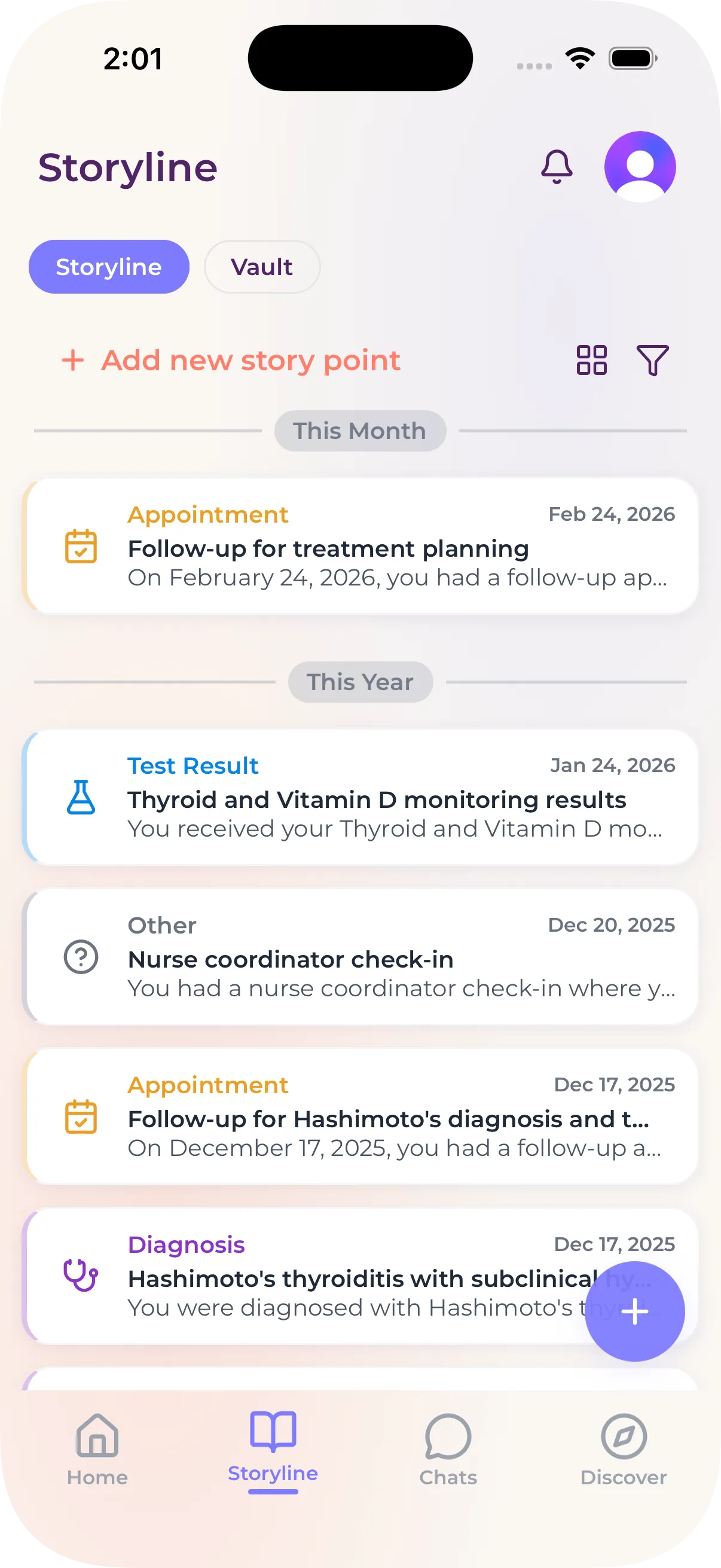
At myStoria, our view is that centralized data matters. If you combine your wearable outputs with your lab results, clinical notes, symptom logs, and other qualitative and quantitative data, you can build a more complete picture of your health than any single device ever could. (If that sounds good to you, download myStoria for free today!)
Most devices silo their data. Ava data stays in Ava. OvuSense data stays in OvuSense. A person using two devices across a fertility journey may end up with years of data that they can't easily show to a new specialist.
As you explore reproductive health wearables, it's worth being careful. Some vendors are more scrupulous than others. Data privacy, data accessibility, and data offshoring all matter, especially for sensitive reproductive health information. Will anti-abortion governments come after your menstrual cycle data? It's hard to say. So think carefully about where your data lives, and who can access it when.
Reproductive health wearables can teach you things about your body that you'd never learn from doctors' visits alone. But they can also give you a false sense of certainty if you mistake pattern data for clinical answers.
If you have budget to spend on wearables, pick devices that match your actual questions (not the marketing you saw on Instagram), make sure you retain control of your information (what if the app breaks? what if the monthly price goes up?), and make sure it lives somewhere you and your care team can see the whole picture.
Start with your goals. Are you trying to conceive? To avoid pregnancy? To manage PCOS? To understand perimenopause? Your answer narrows the field faster than any comparison table.
And when the data piles up (it will!), myStoria is where it all comes together.
Accuracy varies by device and metric. Temperature-based devices can reliably detect ovulatory patterns, but confirmation of ovulation is always retrospective (you see the shift after it happens). OvuSense, for example, claims a ovulatory predictive value of 96%. This is useful pattern data. It does not guarantee conception. While most devices reliably measure what they promise, few have very much independent peer-reviewed data backing up their broader promises.
General fitness trackers offer useful health context, like sleep, stress, recovery, and some temperature data. Purpose-built devices offer more fertility-specific algorithm depth and, in some cases, regulatory clearance for birth control use. If you want a broad health picture with some cycle awareness, a smartwatch works. If you need precise fertile window data, you may want to invest in a dedicated device.
(PCOS was renamed PMOS in 2026.) Irregular cycles create challenges for temperature-only devices. OvuSense provides clinically accurate ovulation tracking for women with PMOS and irregular cycles, predicting ovulation using real-time data from the current cycle. Kegg addresses hormonal variability through cervical fluid impedance rather than temperature. A CGM like Stelo may also be relevant if insulin resistance is a factor. No matter what, this is best handled through a conversation with your care team.
Yes, they are internal devices. They go into the vagina. The OvuCore sensor fits like a tampon overnight. Kegg is used for a few minutes daily rather than overnight. Both use medical-grade materials and are used by many women without issue. Comfort level is a legitimate concern. But you can always stop using a device. Don't let the sunk cost fallacy trick you into accepting any level of physical pain.
Most devices offer CSV or app-based export; Tempdrop, Oura, Apple Health, and Garmin Connect are among the most straightforward. myStoria accepts data uploads, so regularly syncing wearable outputs to the platform creates a centralized reproductive health record you can share with any provider. One place, one picture, one less thing to carry in your head.