July 15, 2026
Sperm Analysis, Decoded

A semen analysis measures count, motility, and morphology against a reference group. Here's what it can and can't actually check.

.svg)



This week is both Canadian Fertility Awareness Week (led by Fertility Matters Canada) and National Infertility Awareness Week in the US, running April 19 to 25. RESOLVE's theme this year is More Than. More than one in six. More than a stereotype. More than the narrow story of who struggles to build a family.
New Canadian data released this month makes that theme feel almost understated.
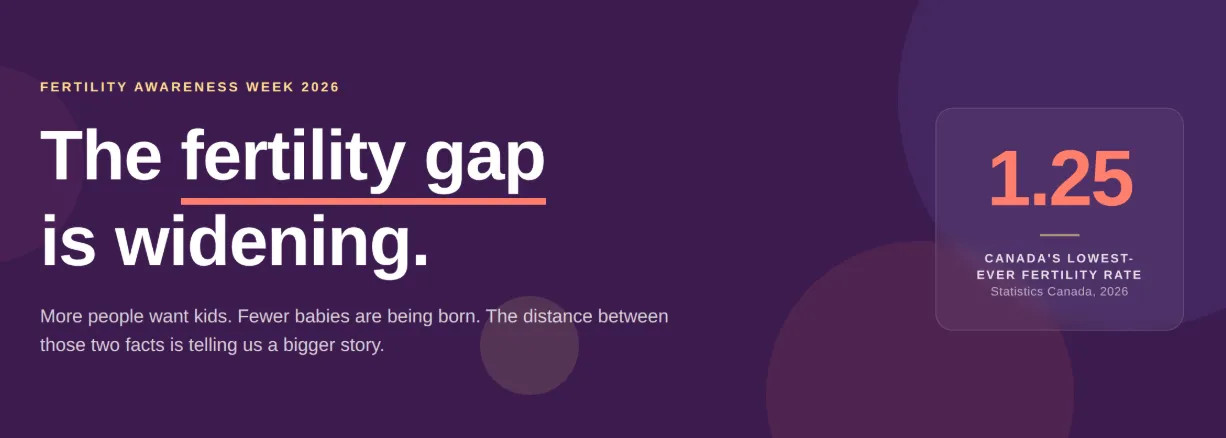
Statistics Canada reported that the share of Canadians who plan to have biological children rose from 41% in 2021 to 46% in 2024. Among people aged 15 to 24, it jumped from 53% to 64%. Over that same period, Canada's total fertility rate dropped to 1.25 children per woman, the lowest ever recorded here, officially placing us in the "ultra-low fertility" category alongside South Korea and Japan. The average age of first-time mothers hit 31.8. Nearly one in four women in their 40s has no biological or adopted children, and about one in ten of them still wants them.
More people want kids. Fewer babies are being born. The distance between those two facts is what researchers are calling the fertility gap, and it's widening.
At Pollin Fertility in Toronto, Dr. Kim Garbedian told CTV News she's seeing a clear shift in who walks through her door: younger women, in their twenties and early thirties, who aren't ready to conceive but want to understand their reproductive health now so they ...


Carly Malo is myStoria's Head of Concierge. She has 2 decades of experience in direct nursing care, having worked in long-term care, sports medicine, practical nursing, and fertility/reproductive health.