September 14, 2026
What Concierge Actually Does

Meet the Medical Insiders behind Concierge, trained pros with nursing backgrounds who help you understand your health and navigate a maze of a system.

.svg)



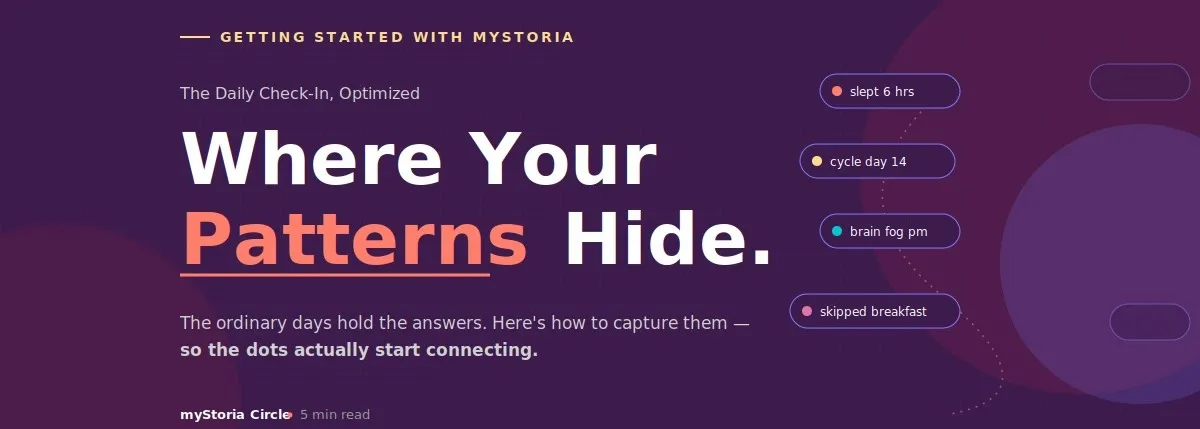
You already know what a check-in is. This is how to make it actually work day in, day out, for every kind of day.
Most people check in when something big happens, a new diagnosis, test results, a flare-up or scary symptom. And that matters. But the real power of the daily check-in is in the ordinary days. The Tuesday when nothing much happened. The Thursday when you slept horribly. The Wednesday you felt weirdly good and don't know why.
That data builds your story. Here's how to capture it.
Start with what's actually going on
You don't have to fit your life into categories. Whatever brought you to myStoria, trying to conceive, managing a chronic condition, getting on top of your health for the first time, figuring out why you feel off, your check-in should reflect your day. Not a template.
That said, most people benefit from touching on a few core areas regularly. Here's what to think about.
How you slept
Sleep affects hormones. Hormones affect everything, energy, mood, recovery, libido, immune function, cycle regularity, blood sugar, you name it. Poor sleep can throw off cycles, amplify symptoms, tank workouts, and impact fertility markers in anyone involved in conception. Your assistant can only connect those dots if you're consistently logging it.
You don't need to track it like a scientist. Just say how last night went.
Mood and emotional state
Your emotional state is ...



With a background in nursing and a genuine passion for care, Jessie supports myStoria members as part of the Concierge team.