November 4, 2026
Ehlers-Danlos Syndrome: It Was Never Just the Joints

Ehlers-Danlos is more than flexible joints. Learn how EDS affects the gut, heart rate, and energy, why diagnosis can take 20 years, and what helps.






You’ve had it for months. The dizzy spells. The stomach pain. The rash that’s gone by the time anyone could look at it. Then you finally get in, and that day you feel fine.
So you describe it from memory. “It comes and goes.” “Maybe a few times a month?” Without anything written down, it gets filed under stress.
An appointment shows how you are that day. A symptom that comes and goes needs a record of the other days. You shouldn’t have to be mid-symptom in an exam room to be taken seriously, so let the record do the convincing.
Log every episode, even the short ones
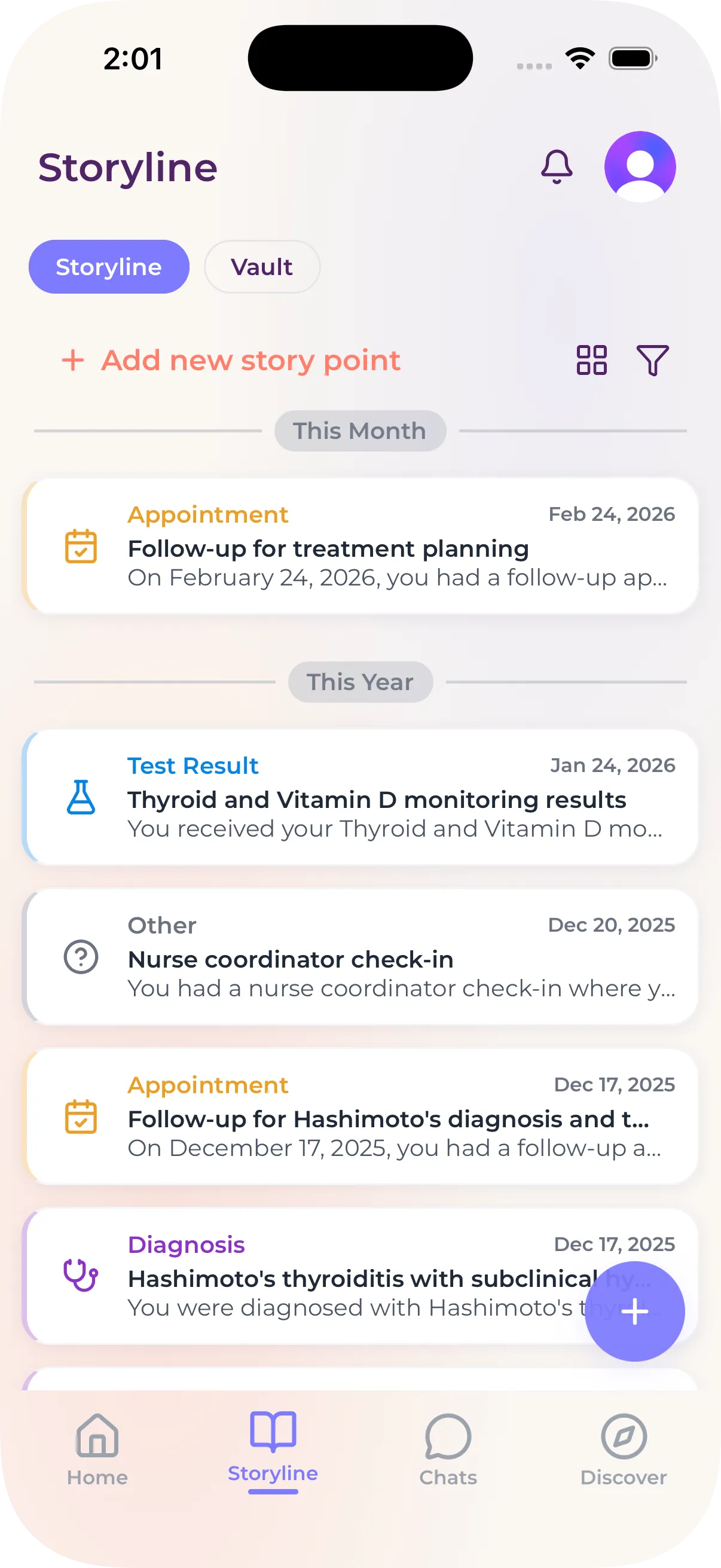
Open a checkin when it starts, or as soon as you can after. Say what’s happening in your own words, and your Assistant adds it to your StoryLine. A two-minute episode counts. Those are the ones people forget by the next visit.
Can’t type mid-episode? Use voice and talk it out.
Log when it stops
Most people log the start and forget the end. “It’s gone, lasted about 40 minutes” tells your provider how long these last, and it shows the gaps between episodes.
Capture what your provider can’t see
If it’s visible, take a photo or video while it’s happening: the rash, the swelling, the reading on your watch or blood pressure cuff. Upload it to chat. It saves to ...



Carly Malo is myStoria's Head of Concierge. She has 2 decades of experience in direct nursing care, having worked in long-term care, sports medicine, practical nursing, and fertility/reproductive health.