October 2, 2026
The Iron Cutoff Was Set Too Low. It Just Went Up.

New 2026 ASH guidelines raised the ferritin level that counts as iron deficient. Why your bloodwork may have been called normal, and the number to ask for.

.svg)



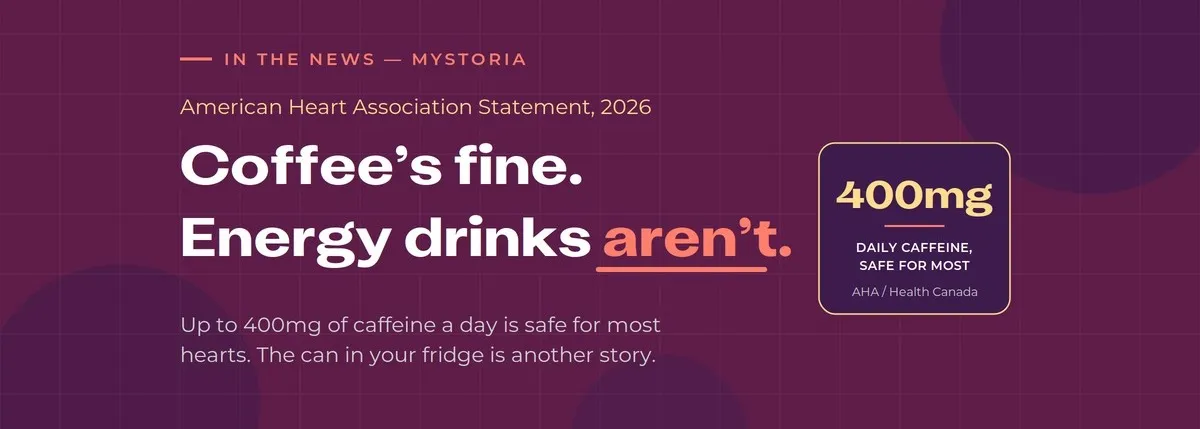
If you've spent years feeling vaguely guilty about your third cup, you can put that down. In July 2026, the American Heart Association published a scientific statement in its journal Circulation reviewing the current evidence on caffeine and the heart. The verdict for most adults is more relaxed than the warnings a lot of us grew up with.
The number that matters is one Canada has used for years. Up to 400mg of caffeine a day is generally safe for most healthy adults. That's roughly three to five cups of brewed coffee, depending on how it's made.
What the statement actually says
The AHA reviewed decades of research and landed on 400mg a day as a safe ceiling for most healthy adults. For some people, that level of coffee was associated with a lower risk of several conditions, including heart disease, stroke, heart failure, atrial fibrillation, high blood pressure, and type 2 diabetes.
Here's the honest limit on that good news. Most of this research is observational, which means it can show that coffee drinkers tend to have lower risk, but it can't prove the coffee is the reason. People who drink moderate coffee may differ in other ways that also ...



Carly Malo is myStoria's Head of Concierge. She has 2 decades of experience in direct nursing care, having worked in long-term care, sports medicine, practical nursing, and fertility/reproductive health.