
September 4, 2026
The Sleep Apnea Pill Is Real. So Is the Fine Print.

The first once-nightly pill for sleep apnea cleared a real Phase 3 trial, but the viral stat oversells it. What AD109 actually does, and who it's for.

.svg)



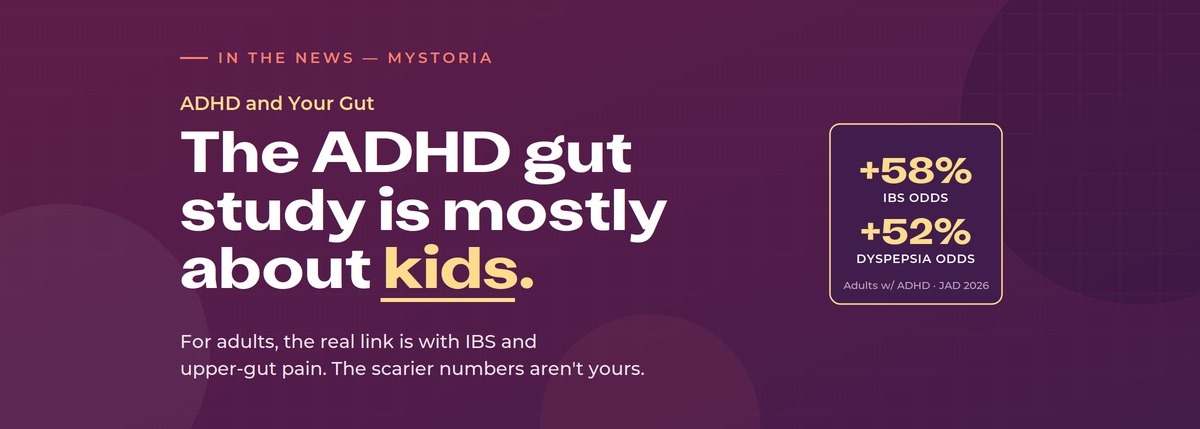
A study made the rounds this month claiming people with ADHD have way more gut trouble. Nearly double the constipation. Four times the odds of losing bowel control. The numbers are real, and if you have ADHD and a gut that has never once cooperated, the headline probably felt like being seen.
Most of the study is about children. Almost nobody sharing it said so.
Researchers at the University of Warwick combined 23 earlier studies covering more than 1.9 million people, then measured how often gut symptoms showed up in people with ADHD versus people without. It's a well-run review, registered in advance and done to proper standards. Overall, ADHD came with about 48% higher odds of gut symptoms.
Most of the studies underneath that number were done in kids. The single largest one, nearly 743,000 people, was children aged 4 to 12. The scary stats making the rounds, the constipation and the bowel-control ones, come mostly from those pediatric studies. Encopresis, the loss of bowel control with the 4x number attached, is largely a childhood issue to begin with. Pulling those numbers over to adults isn't what the data supports, and nobody ...



Carly Malo is myStoria's Head of Concierge. She has 2 decades of experience in direct nursing care, having worked in long-term care, sports medicine, practical nursing, and fertility/reproductive health.