September 7, 2026
Where to Actually Get Your Records

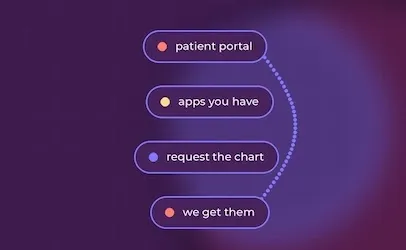
Five ways to get your medical records in hand, from a 30-second portal screenshot to the full chart. What each route gets you, and how to push past a no.

.svg)



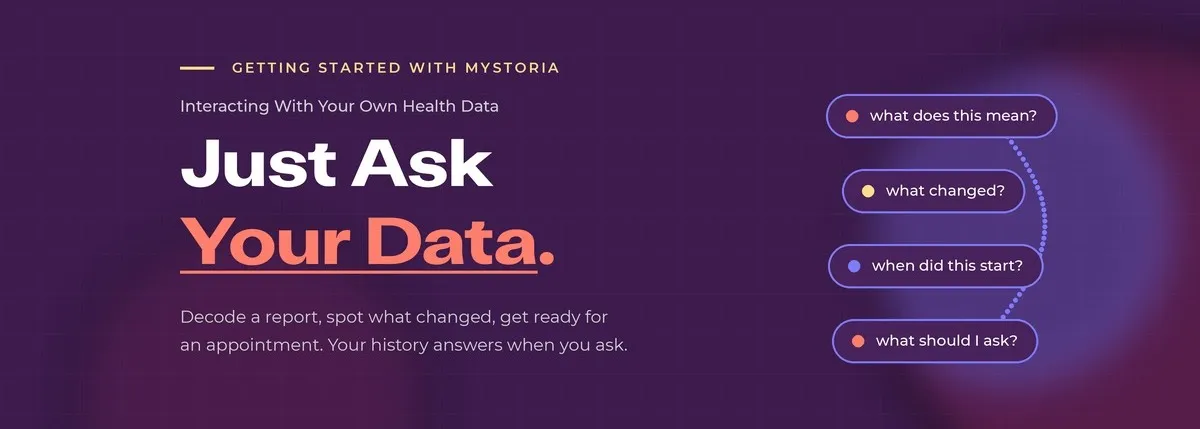
Most people think of their health records as something you store. Upload it, file it, done. But once it's in myStoria, your history isn't just sitting there. You can talk to it.
Here's what that looks like. An MRI report comes in, and it's a wall of medical jargon that means nothing to you. Screenshot it, drop it in your chat, and ask for it in plain language. In a few seconds you understand what it actually says. Then you mention you've been referred to ortho, and now you're not just decoding a report, you're getting ready for what's next: what to expect at the appointment, what the common approaches are for what the report describes, what questions are worth asking when you get there. One report went from confusing to a full game plan, without you leaving the chat.
That's the part people miss. Your data is something you can have a conversation with.
Things worth asking your own data
Once your history is in there, the questions you can ask go a lot further than most people realize. A few to try:
"Break this result down in plain language."
"What changed between my last two sets of bloodwork?"
...



Carly Malo is myStoria's Head of Concierge. She has 2 decades of experience in direct nursing care, having worked in long-term care, sports medicine, practical nursing, and fertility/reproductive health.